ON-Q, Peripheral Nerve Catheter (PNC)
Home Care Instructions
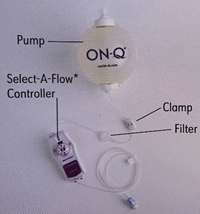
What is a peripheral nerve catheter (PNC)?
-
A peripheral nerve catheter (PNC), or nerve catheter, delivers numbing medicine continuously through a small catheter (tube) directly to the area where you have pain from the surgery. The medication is delivered through a system called “ON-Q”
-
A nerve catheter is beneficial because the medicine goes directly to the surgery area. It does not affect your whole body like other pain medications taken by mouth or through an IV. Therefore, you avoid the side effects of sleepiness, constipation, or nausea.
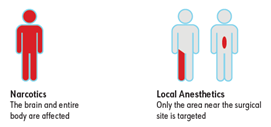
How does a nerve catheter work?
-
The medication delivered through your nerve catheter may block the feeling of pain from your surgery area. This may cause numbness, tingling, and decrease the ability to move the closest arm or leg.
-
If numbness and/or decreased movement occur, take measures to avoid injury. Be careful with movement, walking, and placing hot or cold items on the numb area.
-
A nerve catheter may be used by itself or with other pain medications prescribed by your doctor to manage pain. Frequently, nerve catheters decrease the need for pain medications taken by mouth while the catheter is in place.
Who prescribed me this medication?
How do I contact the Department of Anesthesiology with questions or concerns?
-
You can page the Department of Anesthesiology by dialing (913)-917-5050
-
Follow the prompted instructions and dial the phone number you would like to be reached at followed by the “#” sign
-
A member of the Department of Anesthesiology team will return your page at the earliest convenience.
-
If unable to reach the above phone number, please call the main phone for The University of Kansas Health System at (913)-588-5000 and ask for the on-call Anesthesiologist physician at any time.
Where is my Nerve Catheter Located?
____Interscalene Nerve (lower portion of neck)
____Infraclavicular Nerve (below collar bone)
____Femoral Nerve (upper portion of leg)
____Popliteal Nerve (side or behind knee)
____Sciatic Nerve (back of leg, below knee)
What medication is being given through my nerve catheter?
____ROPIVICAINE 0.2%
____OTHER: ____________________________
Settings: _______________________________
Does my catheter come with a button? If so, what does this do?
____Yes
____No
-
If you have a button to push with your ON-Q system, you may use this to deliver extra numbing medicine to the area if your pain is not tolerable.
-
You can press this button every ______________ minutes.
What should I do to keep my catheter working properly?
-
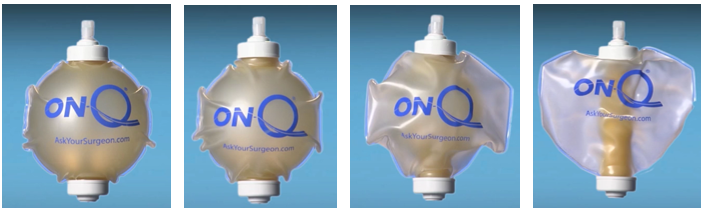
The pump delivers the medication at a slow, continuous rate. As the medication is delivered, the ball of numbing medication will become smaller. It may take 24 hours to notice this change.
-
Make sure the tubing clamp is open and slides freely on the tubing. The tubing should not be kinked or bent.
-
Protect the ball of medicine from sunlight and heat.
-
Keep the ball of medicine away from water. DO NOT shower. Instead, take sponge baths.
-
Ensure the catheter is not pulled by wearing the carrying case provided
-
Some leaking at the area where the tube enters the skin is normal
My catheter is leaking. Should I be concerned?
-
Some leaking at the site is normal.
-
If the leakage becomes bothersome, please notify the Anesthesiology Department
Are there any symptoms that I should be concerned about? If so, what should I do?
Please CONTINUE your infusion and notify the Department of Anesthesiology if you experience the following symptoms:
-
Temperature greater than 101 degrees for 8 hours
-
Increasing numbness or weakness in your arm or leg that has the nerve catheter
-
Excessive pain at catheter insertion site
Please STOP your infusion, clamp the system tubing, and notify the Department of Anesthesiology if you experience the following symptoms:
-
Mouth or tongue numbness and tingling
-
Metallic taste in your mouth
-
New and sudden increase in anxiety, dizziness, and shortness of breath
-
Skin rash or hives
How will I know when my numbing medication is finished?
-
The medication will last approximately 48 hours
-
When all the numbing medication has been given, the ball of medicine will collapse and resemble an apple core.
Once the medication is finished, prepare to remove the catheter:
-
Wash your hands thoroughly with soap and warm water.
-
Remove the dressing covering the catheter site.
-
Grab the catheter close to the skin and gently pull on the catheter. It should slide out easily and should not be painful.
DO NOT:
-
After you remove the catheter, check the catheter tip for the black marking to ensure the entire catheter was removed. Call your anesthesia team if you don’t see the black marking.
-
Place an adhesive bandage over the site.
-
Discard the catheter and medication ball into a trash bag away from children and/or animals.
Please refer to this website for additional education: https://www.myon-q.com/
Please scan the QR code for more information and a catheter removal video (make sure to select View All Files if using your mobile device to view the video)